-
2018-09-12150碟子
-
2018-09-13一次性環保餐具-碟子
-
2018-09-14一次性可降解餐具-270ml碗(wǎn)
-
2018-09-14一次性餐具-叉子
-
2018-09-14環保餐盒
可降解顆粒與聚合物的相應(yīng)關(guān)係

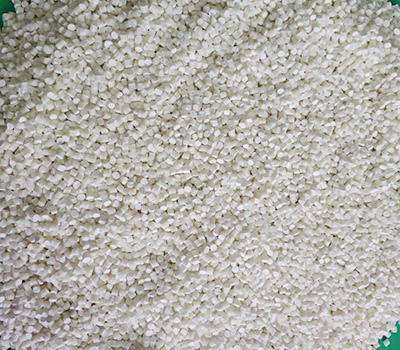
可降解顆粒包括在用於地下應用如鑽井中能進行不可逆降解的可降解材料(其通常是可降解聚合物),此處所使(shǐ)用的(de)術語一種顆粒或多種顆粒(lì)是指具有以下物理形狀的一種(zhǒng)或多種微粒薄層(céng)(platdet)、刨花(shavings)、纖(xiān)維、小薄片(flake)、帶狀、棒、條、球體、超環狀、小球狀、片(piàn)(tablet)或其它合適形狀的。
Degradable particles include degradable materials (usually degradable polymers) that can be irreversibly degraded in underground applications such as drilling. The term one particle or multiple particles used here refers to one or more thin particle layers, shavings, fibers, flakes, belts, rods, strips, spheres, super rings, small spheres, tablets or other suitable shapes with the following physical shapes.
作為此處所使用的術語不可(kě)逆,意指可降解材料可原位降解(例如在鑽井中),但降解之後不會原位(例如在(zài)鑽井中)重結晶或重(chóng)新(xīn)固結。
As the term used herein is irreversible, it means that degradable materials can be degraded in situ (e.g. in drilling), but will not recrystallize or reconsolidate in situ (e.g. in drilling) after degradation.
可降解指可降解材(cái)料可以進行諸(zhū)如異相(或本體(tǐ)消耗)和均(jun1)相(表層消耗沐解降(jiàng)解(jiě)的兩(liǎng)種(zhǒng)相對極端情形,以及在這兩者之間的任意降解階段(duàn)。這種降解可以尤其是由化學或熱反應或輻射引發的反應中所產生的。
Degradability refers to the two relatively extreme situations of degradable materials, such as heterogeneous (or bulk consumption) and homogeneous (surface consumption) degradation, and any degradation stage between them. This degradation can be especially caused by chemical or thermal reaction or radiation induced reaction.
作為此(cǐ)處所用術語一種聚合(hé)物(wù)或多(duō)種聚(jù)合物並不暗示特定聚合度,例如,此定(dìng)義還(hái)包括(kuò)低聚物。可降解(jiě)聚合物的可降解度通(tōng)常少部分地取決於其骨架結構。例如:
As the term is used herein, a polymer or polymers do not imply a specific degree of polymerization, for example, this definition also includes oligomers. The degree of degradability of degradable polymers usually depends at least in part on their skeleton structure. For example:
在骨架中存在的可水解和/或可氧化的鍵通常(cháng)能產生可以如下所述進(jìn)行降解的材料。這些聚合物的降解速率取(qǔ)決於重複單元的類型、組成、序列、長(zhǎng)度、分子幾何形狀、分子量、形態(例如結晶度、球晶尺寸以及(jí)取向度)、親水性、疏水性、表麵積和添加劑。
Hydrolyzable and/or oxidable bonds present in the skeleton can generally produce materials that can be degraded as described below. The degradation rate of these polymers depends on the type, composition, sequence, length, molecular geometry, molecular weight, morphology (such as crystallinity, spherulite size, and orientation), hydrophilicity, hydrophobicity, surface area, and additives of the repeating units.
另外,該聚合物所處環境如溫度、水分的存在、氧氣、微生(shēng)物、酶、pH等會影響其如何降解。更多相關內容就來我們網站https://www.shuiniguan.com谘(zī)詢(xún)了解(jiě)吧!
In addition, the environment of the polymer, such as temperature, the presence of water, oxygen, microorganisms, enzymes, pH, etc., will affect how it is degraded. More relevant content will come to our website https://www.shuiniguan.com Ask and understand!
- 上(shàng)一個: 一次性環保(bǎo)餐具的現(xiàn)狀和前景分析
- 下一個: 目前製備生物降解顆粒方(fāng)法(fǎ)相關的問題
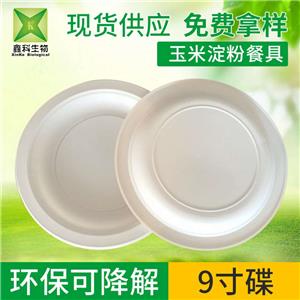 150碟子
150碟子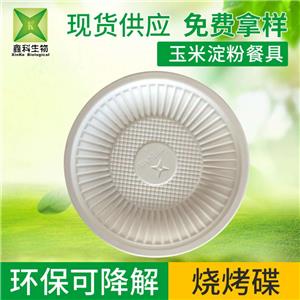 一次性環保餐具-...
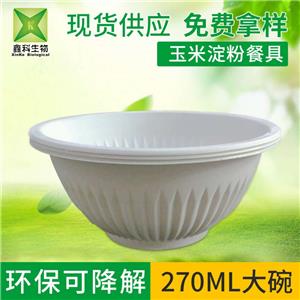 一次性可降解餐具...
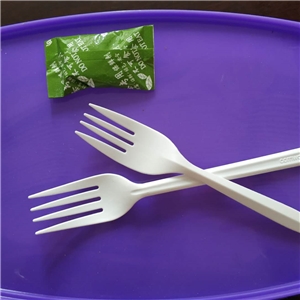 一次性餐具-叉子
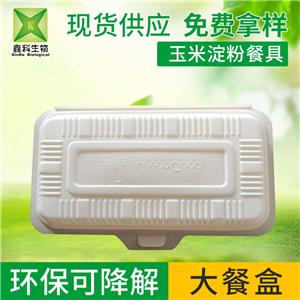 環保餐盒
環保餐盒
相關產(chǎn)品:
相關新聞: